Dr. Bürklin-Wolf Winery Reiterpfad G.C. Riesling dry 2023
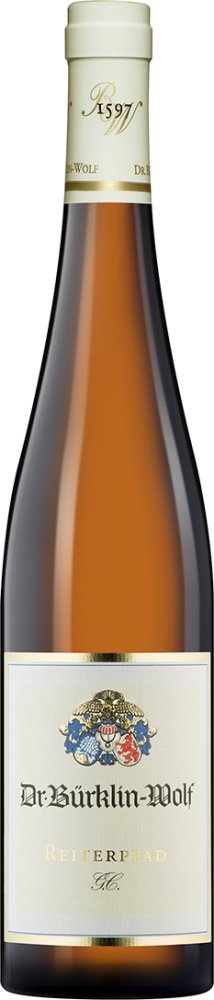
An exceptional Riesling from the Palatinate region presents itself, embodying the long tradition and terroir of this renowned wine region. Meticulous work in the vineyard and gentle processing define this dry Riesling. The “Reiterpfad” site is known for its unique soils, which produce wines with great depth and complexity. The 2023 vintage promises exceptional quality – a combination of maturity, fruit, and minerality awaits you. This wine is an expression of a special vintage, more than just a drink.
Palatinate – A Paradise for Riesling
South of Rhineland-Palatinate lies the Palatinate. A hilly landscape protects the vineyards from unfavourable winds. Approximately 23,793 hectares of vineyards shape the landscape. The climate is mild and offers many hours of sunshine, ideal for growing Riesling. The soils are diverse, a mixture of sand, loam, marl, and clay. The southern Wine Route, in particular, offers loamy soils. The Mittelhaardt, on the other hand, is characterized by lighter, mineral-rich subsoils. Here, complex, long-lasting wines are created.
The Palatinate is increasingly convincing in terms of quality, not just quantity. A growing number of “Grosses Gewächs” wines proves this. Renowned wineries are members of the “Verband Deutscher Prädikatsweingüter” (Association of German Quality Wine Estates). 2023 is considered a promising vintage for white wines. Biodynamic cultivation methods favoured excellent ripening. Despite lower yields, the grapes were convincing. Uniform ripening enabled the extraction of aroma and structure.
Weingut Dr. Bürklin-Wolf – Tradition and Innovation
Since 1597, Weingut Dr. Bürklin-Wolf has been cultivating vineyards in Wachenheim. The family is closely associated with the Ruppertsberg area. Craftsmanship and respect for the terroir define the philosophy. Selection of the parcels and gentle processing are important here. Cellar master Nicola Libelli and estate manager Steffen Brahner rely on biodynamic methods that promote soil fertility and optimize grape ripening.
In 2023, the advantage of this practice became clear. An early, controlled harvest ensured the quality of the grapes. What arrived in the cellar was excellent. The winery places emphasis on parcel selection in the “Reiterpfad”. Grapes are selected according to subsoil to capture the diversity of the terroir. The “Reiterpfad G.C.” is one of the outstanding sites in the Palatinate.
“Reiterpfad” Site – History in the Wine
The name “Reiterpfad” (Rider's Path) refers to Roman military roads. Beneath the surface lies a soil for Rieslings with exceptional depth. Sandy-loamy matrix, interspersed with Bunter sandstone and calcareous gravel, stores heat. Riesling develops its spicy, almost Burgundy-like structure here. As a “Erste Lage” (First Site) and “Grosse Lage” (Grand Site), the quality is particularly high. Deep loam stores water, while permeable Bunter sandstone releases minerals. This creates wines of powerful elegance. Calcareous gravel gives the Riesling a fine acidity, which makes it suitable for aging for decades.
The combination of soil composition and microclimate is unique. The site is ideal for growing Riesling. Here, wines with character and potential are created. The “Reiterpfad” is a terroir that highlights the personality of the Riesling.
Sensory Analysis – Aroma Diversity and Taste
In the glass, the 2023 “Reiterpfad G.C.” shows a rich golden yellow colour. Mature fruit and long ripening in a double-pièce barrel are recognizable. After warm fermentation, the wine matures in oak barrels until April of the following year. This patience develops a creamy texture and fine tannin structure. The nose is captivating with opulent maturity. Amalfi lemon, candied peach notes, and dried papaya mingle with spring flowers and mineral accents.
On the palate, the wine unfolds its powerful, elegant structure. The acidity is crisp and mineral. A fine tannin corset gives the Riesling length. The creaminess makes it well-rounded and velvety. The finish is juicy, long, and with deep bass notes. This Riesling is a pleasure for all the senses.
Quality and Classification
The “Reiterpfad G.C.” is a “Grosses Gewächs” (G.C.) according to the VDP (Verband Deutscher Prädikatsweingüter). This is the highest level for dry wines from first-class sites. Dry-grown, it combines concentration and elegance. International ratings underscore its quality. 96 points from James Suckling, 94 points from Robert Parker, and 92–94 points from Vinous demonstrate the recognition.
Terroir in the Glass – Grape Variety, Soil, and Vintage
Riesling is a grape variety that reflects the terroir. Lively acidity, diverse aromas, and ageing potential make it the epitome of German viticulture. In the Palatinate, it thrives on skeletal, mineral-rich soils. The sandy-loamy subsoil of the “Reiterpfad” with Bunter sandstone and calcareous gravel is ideal. 2023 favoured the strengths of the Riesling. Biodynamic cultivation ensured a ripening advantage. The early, precise harvest preserved the aroma intensity. Barrel ageing refined the texture.
Culinary Pairing
The powerful minerality and creamy structure of the “Reiterpfad G.C.” make it a versatile companion. It pairs particularly well with hearty, not too fatty dishes. Roast pork, wild pheasant, or duck leg harmonize perfectly. Pork belly, curry, or vegetable stir-fry benefit from the fruity freshness. Pasta with intense sauces or grilled seafood round out the dishes.
Presentation – Bottle and Label
The 1.5-liter bottle of “Reiterpfad G.C.” is distinguished by its elegant design. A slender, classic body with a slightly curved neck. A white label with golden accents adorns the bottle. The coat of arms of the winery in blue, red, and gold is a symbol of tradition and quality. Lettering in classic serif font emphasizes the premium character. The year “1597” on the neck collar reminds of the long history of the winery.
Conclusion
Weingut “Dr. Bürklin-Wolf Reiterpfad G.C. Riesling trocken 2023” is a masterpiece of the Palatinate. Craftsmanship, terroir-driven cultivation, and modern winemaking define this wine. Its powerful minerality, creamy texture, and long finish make it a wine for connoisseurs. With a potential for ageing until after 2043 and international top ratings, it is an investment in the future. A price of €160 (Wine bottle, 1.5 L) reflects the high quality and the special terroir. Anyone who tastes this Riesling tastes the soul of the Palatinate.

| Wine | Dr. Bürklin-Wolf Winery Reiterpfad G.C. Riesling dry 2023 |
|---|---|
| Wine type | White wine |
| Country | Germany |
| Region | Palatinate |
| Grape | Riesling |
| Vintage | 2023 |
| Taste | Dry |
| Food pairing | roast pork, wild pheasant, duck leg, pork belly, curry, vegetable stir-fry, pasta |
| Quality | Prime vineyard site |
| Producer | Dr. Bürklin-Wolf Winery |
| Terroir | sandy loam, Bunter sandstone, calcareous rubble |
| Volume | Wine bottle, 1.5 L |
| Price approx. | 160 € |
| EAN | 4016462519505 |
FAQ about Dr. Bürklin-Wolf Winery Reiterpfad G.C. Riesling dry 2023
What makes the »Weingut Dr. Bürklin-Wolf Reiterpfad G.C. Riesling trocken 2023« so special?
This Riesling combines the long tradition of the winery with the unique terroir of the Reiterpfad vineyard. Biodynamic cultivation methods, careful selection of individual plots, and long maturation in oak barrels give it exceptional depth, complexity, and ageing potential.
At what temperature should this Riesling be served?
To optimally unfold the diversity of aromas, a serving temperature of 10–12 °C is recommended. Slightly cooler for a refreshing experience, slightly warmer to better perceive the complex aromas.
With which dishes does this dry Riesling from Dr. Bürklin-Wolf pair best?
This Riesling is a versatile food companion. It pairs particularly well with hearty dishes such as roast pork, wild pheasant, or seafood. It is also an excellent choice with intense sauces or curry dishes.
Is the »Weingut Dr. Bürklin-Wolf Reiterpfad G.C. Riesling trocken 2023« suitable for ageing?
Yes, this Riesling has excellent ageing potential. Under optimal conditions, it can continue to gain in quality until 2043 and beyond. The fine acidity and the limestone gravel in the soil of the Reiterpfad contribute to its longevity.